
With the SiGMA Asia Summit in Manila concluded, we checked in with the Slotegrator Academy to explore the state of play today in Asia’s iGaming markets.
According to Statista, total online gambling market revenue in Asia is projected to reach US$5.71billion this year, and by 2029, the number of Asian players is expected to be touching 34 million, equivalent to the entire population of Malaysia, or Peru.
Asians have a passion for gaming and a reputation for quickly embracing new technologies, most recently witnessed with the rapid growth of live dealer games and cryptocurrencies. This is a perfect mix for iGaming operators, who find ideal audiences in markets from China to Turkey, and most points in between. The fact is, that while many Asian nations still ban or heavily restrict gambling, there is no denying the power of culture and so from Baku to Bangkok, Tashkent to Taipei or Hanoi to Hyderabad, players will place bets irrespective of the laws of the land.
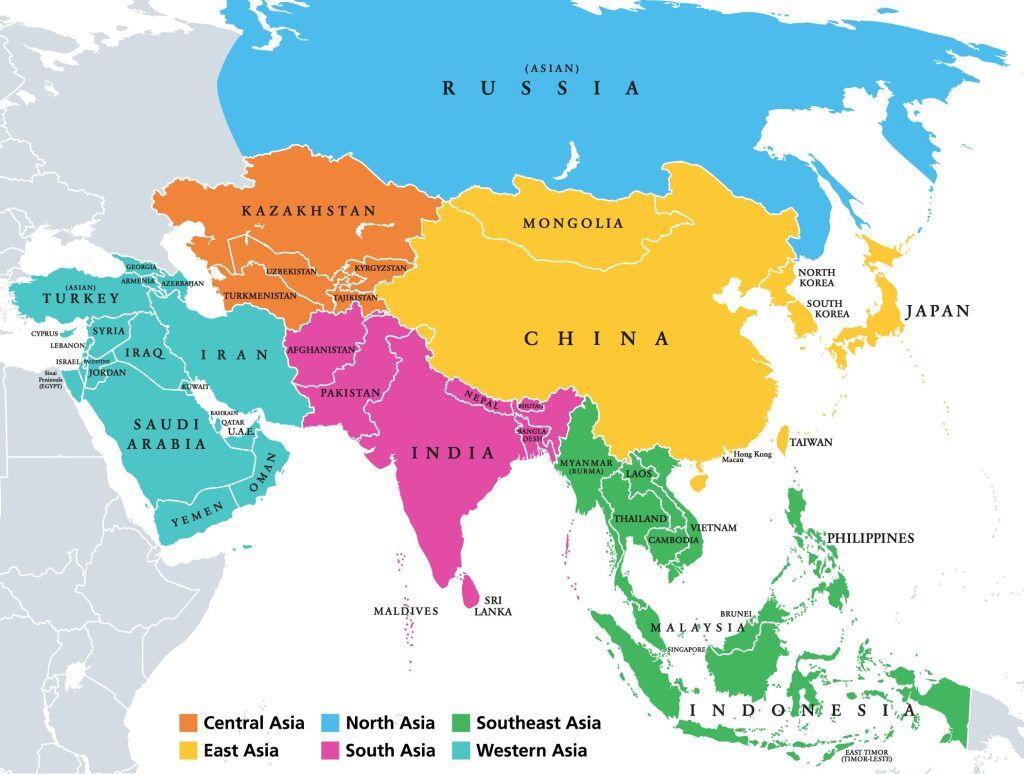
For a clearer picture of the Asian gambling landscape, this region can be divided into groups by regulatory status, as well as the volume and quality of traffic based on player behaviour and spending power. Aside from North Asia – which is basically Russia – the region can be divided into the five sub-regions of Western, Central, East, South and Southeast. These extend from Turkey in the West to Japan in the East, and from Kazakhstan and Mongolia in the North to Indonesia in the South, a vast mass of around 50 independent nations.
Not everybody is game
Due to traditional or religious views, many countries in Asia prohibit all forms of games of chance. Countries like Thailand, Laos, Nepal, Pakistan, Brunei and Indonesia maintain a blanket ban on gambling (although Thailand is currently moving towards regulation in the form of integrated casino resorts).
Other countries such as East Timor, Bhutan and Mongolia ban land-based activities, but have no regulations in place regarding online gambling. And whilst many countries don’t allow locals to play, people still travel to gamble in the neighbouring countries, which is why most land-based casinos accept foreign players, and most online platforms localise their websites and offers for different target markets.
Technically advanced populations use VPNs to access foreign iGaming platforms, and widespread cryptocurrency ownership allows players to gamble despite limitations on bank transactions. This, and the fact that several Asian governments are discussing, planning or already implementing meaningful gambling regulation, makes the Continent well worth the attention of serious international operators.
Common themes cross all borders
Thankfully, a few common themes prevail across the entire Continent. Advanced technologies such as artificial intelligence and blockchain have been widely adopted, and mobile usage is virtually universal. Cryptocurrencies are here to stay, with Asian players appreciating the speed, security and anonymity. Platforms aspiring to market entry must support whichever cryptocurrency is most popular in each chosen target market. Asian players will expect these features from day one.
TaDa Gaming, one of the leading Asian game providers, says: “Incorporating AI-generated images into the promotions will invigorate the entire Asian market.
“Throughout Southeast Asia, real-person banners are popular for promoting and attracting players. AI-generated real-person images make everything more relatable. Soon, animations will also become smoother, making the entire promotion more appealing.”
Best practices produce premium performance
As always, genuine localisation is essential and requires a lot more than simply translating your site into the local language. Every single detail, from language to design to culture, must be determined with the tastes, traditions and technologies of the target market in mind. And this includes the increasingly essential element of Responsible Gambling.
Adhering to best practices and policies in regulated markets is an essential aspect of compliance and, as everybody knows, meeting regulatory requirements increases the industry’s transparency and enhances its wider reputation.
Ataur Rasul Abeer, Senior Sales Manager at Slotegrator, emphasises this point: “Follow this formula: regulatory awareness plus focus on responsible gaming plus the embracing of technology equals success in Asia. Your business will not only perform well, but you will also be considered a serious partner.”
Popular player preferences
In terms of actual games, TaDa Gaming has shared insights about player preferences in the market, with Asian players exhibiting distinct preferences that set them apart from other markets.

“They often gravitate towards games that combine engaging visuals with culturally resonant themes and features. Among the diverse range of gaming options, fishing games have garnered immense popularity and continue to do so through 2024.
“Fishing games stand out due to their interactive and dynamic gameplay. Unlike traditional slot, these games require players to actively participate by aiming and shooting at various types of fish, each carrying different point values. This blend of skill and luck, coupled with vibrant graphics and multiplayer options, creates a captivating experience that resonates deeply with Asian players.”
Trends that cannot be ignored
Asia is a region of contrasting cultures, and this includes different attitudes to gambling. Muslim countries are opposed to playing for money or prizes, while their neighbours have long traditions of gambling and even favourite games that have been played for generations.
Either way, people gamble. They find more sophisticated ways to do so in places where it is forbidden – cryptocurrencies are extremely widespread in every region of Asia, as well as VPNs, as is simply traveling to countries where gambling is legal.
Websites that target Asia must be localised, and client must be offered payment methods that suit their needs. Besides the classic payment cards, Asian players will expect to use e-wallets like ePay, Trustly, Neteller, Skrill and various cryptocurrencies.
Attitudes are shifting
The rising awareness of player protection measures and potential value of the industry in terms of state revenues has caused a noticeable shift in attitudes in many countries, opening the door to legalisation where only a decade ago it would have been out of the question.
As things stand today, liberalisation is following the example of the western and Latin American countries and is primarily limited to the land-based industry and focused on tourism. But this will inevitably change and, we believe, it will evolve very quickly.
Thanks to Slotegrator
The Slotegrator Academy conducts analytical research in all spheres of gambling business and share this knowledge in articles and reviews. This includes the latest and most useful information from the world of iGaming. To learn more about iGaming in Asia, read THIS article to get a clear picture of the Asian gambling landscape and a breakdown by sub-regions.