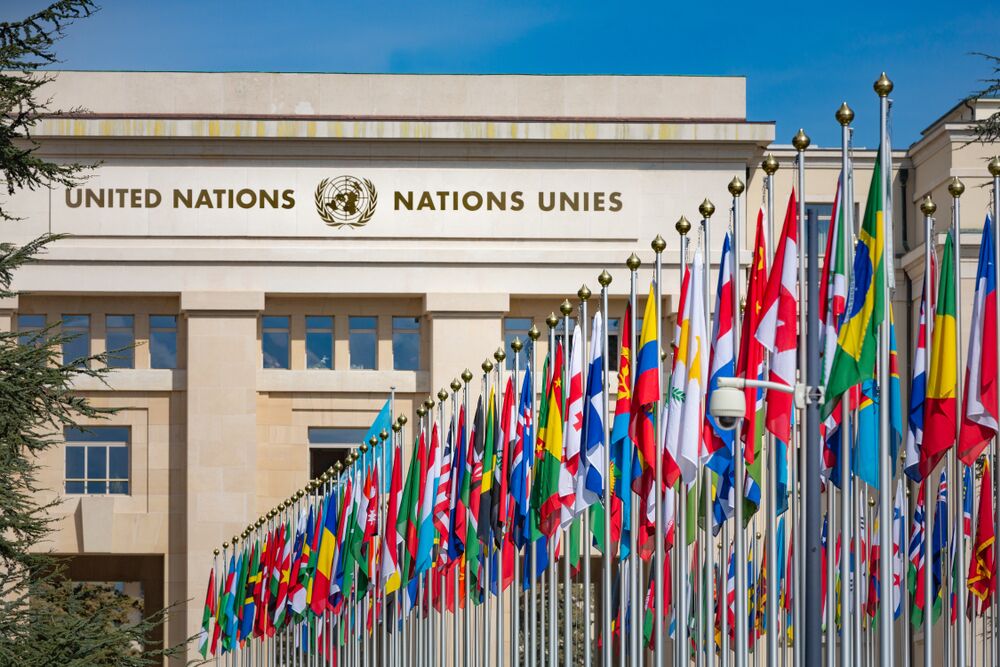
China remains the principal customer market for illegal online gambling networks operating across Southeast Asia, according to a United Nations report warning that gambling, fraud, money laundering and human trafficking have become increasingly interconnected.
The UN Office on Drugs and Crime said demand from mainland China has not been eliminated by the country’s prohibition on gambling but displaced to offshore and online operators based across the region.
China, Hong Kong, Macau and Taiwan are estimated to account for about half of global illegal gambling turnover, which the report places within a wide range of US$340bn to $1.7tn. The scale of this range reflects the difficulty of measuring an industry operated through unlicensed websites, underground payment systems and corporate structures spanning several jurisdictions.
UNODC described Chinese nationals as the primary customer base for many criminal networks operating online gambling businesses from Southeast Asia. Operators frequently combine staff, technology and payment systems across multiple countries. A business may hold or claim a licence in one jurisdiction, use servers in another and operate customer service, marketing and payment functions from compounds elsewhere in the region.
The report said networks use rapidly changing website domains, mule bank accounts, cryptocurrency and informal value transfer systems to avoid blocking measures and move money between customers, operators and criminal organisations.
Cryptocurrency has substantially changed the financial structure supporting the illegal market. Chinese language money laundering networks processed an estimated $16.1bn in illicit cryptocurrency during the previous year, according to the report. Digital assets allow funds to move more quickly across borders while reducing reliance on conventional banking systems.
UNODC said illegal gambling should no longer be viewed as a separate criminal industry. The same groups, properties and financial networks are increasingly used for cyber enabled fraud, human trafficking and money laundering. Casino hotels and compounds originally developed for offshore gambling have been adapted to accommodate multiple criminal businesses.
“Illegal online gambling did not emerge as a discrete criminal sector,” the report said. “It developed as an extension of pre-existing criminal portfolios.”
The Philippines’ prohibition of offshore gaming operators illustrates the difficulty of relying on national enforcement alone. The closure of Philippine Offshore Gaming Operators did not eliminate the businesses or infrastructure supporting them. UNODC said some networks relocated operations to Cambodia, Myanmar, Indonesia and other jurisdictions where enforcement capacity or political oversight was weaker.
The findings suggest prohibition can displace illegal gambling rather than suppress demand when neighbouring markets do not coordinate licensing, payments, telecommunications and enforcement.
UNODC also highlighted the increasing use of social media and influencers to recruit younger customers. Illegal operators are using targeted advertising, mobile products and gaming style interfaces to make offshore gambling appear more accessible and socially acceptable in countries where it remains prohibited.
The report described youth exposure to illegal gambling through social media as a public health concern that governments have struggled to address. It said influencers, including young women with large online followings, were being used to normalise participation and lower the barriers between social media entertainment and gambling.
The warning comes amid growing scrutiny of technology platforms over advertisements linked to illegal gambling and online fraud. Thailand’s Consumers Council has taken legal action against Meta, alleging that Facebook allowed scam and gambling advertisements to reach users without sufficient intervention.
The UN called for coordinated regional action rather than enforcement strategies that treat gambling, scam compounds, trafficking and money laundering as separate problems. Its assessment said tens of thousands of trafficked workers remain within compounds used for gambling and fraud operations, creating a security and human rights problem extending beyond lost gambling taxes.
The report forms part of UNODC’s wider assessment of transnational organised crime in Southeast Asia, which identifies casinos, online gambling and underground banking as central components of the region’s criminal economy.
For gambling regulators, the findings underline the limitations of website blocking and domestic licensing action when operators can move domains, payments and staff across borders.
China may remain the largest source of customers, but the infrastructure supporting the market is regional and increasingly global. Addressing it will require cooperation between gambling regulators, law enforcement, financial intelligence units, payment businesses, technology platforms and licensing jurisdictions.