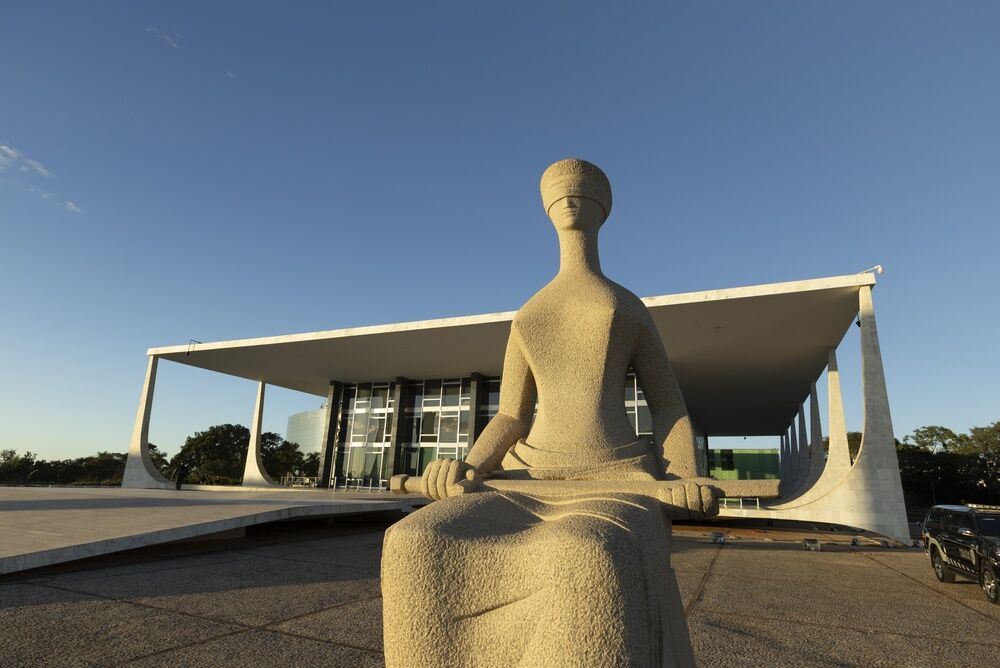
Brazil’s Supreme Federal Court will resume its hearing into the country’s prohibition on land-based gambling on August 6, with a decision potentially affecting casinos, bingo halls, slot-machine venues and the jogo do bicho numbers game.
The court is considering whether Article 50 of Brazil’s 1941 Criminal Misdemeanours Law, which makes the operation of games of chance a criminal offence, remains compatible with the country’s 1988 Constitution. The case concerns arguments that the prohibition conflicts with constitutional protections for free enterprise and individual liberty.
A ruling against the prohibition could remove or weaken the principal criminal barrier facing parts of Brazil’s land-based gambling sector and increase pressure for the introduction of a regulated licensing system.
It would not, however, immediately authorise commercial casinos or bingo halls. Brazil would still require legislation covering licences, taxation, permitted locations, technical standards, anti-money laundering controls and responsible gambling requirements.
Justice Luiz Fux began presenting his opinion on August 5 but requested that the hearing be suspended before completing his vote. Proceedings are scheduled to resume with the conclusion of his opinion before the remaining justices vote.
Fux’s opening comments indicated that he may support retaining the criminal provision. He said the next section of his opinion would examine whether Article 50 protects the more important legal interest of society and raised concerns about the wider consequences of gambling.
Paulo Gonet, prosecutor general of Brazil, also argued that the prohibition should remain in force. He maintained that the legalisation of selected forms of betting did not justify permitting all gambling activities and that any wider reform should be decided by Congress.
The appeal originated in Rio Grande do Sul after a state court acquitted an individual accused of operating illegal gambling. The lower court concluded that the principles underpinning the 1941 prohibition were no longer compatible with Brazil’s constitutional protections.
The Supreme Court’s eventual decision will guide lower courts considering comparable cases because the appeal carries general repercussion status. The ruling is therefore expected to have consequences beyond the individual prosecution.
José Francisco Manssur, former special adviser to the executive secretariat of Brazil’s Ministry of Finance, said: “It is very important that, at this moment, the Supreme Federal Court recognises the scientifically proven conclusion that there is no way to tackle the problem other than through regulation.
“Any scenario involving a ban would only benefit illegal operators, increase organised crime’s hold on this sector and create a clandestine market that would neither observe nor respect any laws.”
The case is separate from legal challenges to Brazil’s regulated fixed-odds betting framework and will not directly determine whether licensed online betting remains lawful.
A wider bill awaiting consideration in the Senate, PL 2,234/2022, would establish a regulated framework for casinos, bingo, jogo do bicho and other gambling activities.